
Few Belgian towns pack this much drama into such a small footprint. A medieval citadel looms 100 metres above the rooftops. A Gothic church presses impossibly close to the cliff face. And the River Meuse slides past it all, lined by colourful façades and oversize saxophone sculptures — because yes, the instrument that defined jazz was invented here.
Dinant works brilliantly as a day trip from Brussels or Namur, but the surrounding countryside — kayak rivers, castle ruins, cave systems, forested valleys — easily justifies staying a night or two. Whether you come for history, adventure, or simply a very good Leffe in its spiritual homeland, Dinant delivers.


Quick Facts
- 📍 Province of Namur, Wallonia
- 🗣 French-speaking
- 🚂 ~1h50 from Brussels
- 🕐 Best visited: May–Oct
- ⏱ Town: 3–5 hours
- 🏨 2 town-centre hotels
- 🎷 Birthplace of the saxophone
Getting to Dinant
By Train
There are no direct trains from Brussels, but the connection is easy: take an IC train to Namur, then switch to the IC train toward Dinant. Trains run twice per hour on each leg.
| From | Route | Frequency | Total Time |
|---|---|---|---|
| Brussels | Brussels → Namur → Dinant | 2× per hour | ~1h50–2h |
| Namur | Direct IC | 2× per hour | ~40 min |
| Liège | Liège → Namur → Dinant | 2× per hour | ~1h40 |
💡 Tip: Buy a day-return ticket from Brussels for the best value. The Dinant train station sits on the left bank of the Meuse — cross the Pont Charles-de-Gaulle bridge (adorned with resin saxophones!) to reach the historic centre.
By Car
From Brussels or Namur, take the E411 motorway south and exit at junction 20. The journey from Brussels takes around 1 hour 15 minutes. If coming from Namur, the scenic N92 river road is worth the extra few minutes — it hugs the Meuse all the way in.
Parking in Dinant
- Free parking also available at the Grotte la Merveilleuse
- Large free parking at the Citadel summit (reached by road — follow signs)
- Paid riverside parking on the left bank near the train station

Top Things to See and Do in Dinant
Dinant boasts a myriad of attractions that cater to all interests. Here are our top recommendations for things to see and do in Dinant:
🏰 The Citadel of Dinant
€8–€14 ⏱ 1.5–2 hours🚠 Cable car available👨👩👧 Family-friendly
The Citadel is Dinant’s defining landmark — a fortress built into the cliff face in its current form between 1818 and 1821 during Dutch occupation. Reach it by cable car (the same ticket covers access and the museum), or tackle the famous 408 steps cut into the rock in 1577. The views from the top over the Meuse valley are exceptional.
Inside, an interactive tablet-based tour walks you through the site’s 900-year history, with the most powerful section devoted to August 1914, when German forces massacred over 600 Dinant civilians in one of WWI’s earliest atrocities. Well-preserved rooms — the kitchen, bakery, forge — give a feel for the 400 soldiers once stationed here. Allow 1.5 to 2 hours.

Practical Info
- Address: Chemin de la Citadelle 1, 5500 Dinant
- Tickets: ~€8 (adults, stairs only) / ~€12–14 (cable car + museum)
- Open year-round; cable car may close Nov–Mar — check before visiting
- Café with terrace at the top — great beer and views
🎷 Maison de Monsieur Sax — Birthplace of the Saxophone
Free Entry ⏱ 20–40 min💶 Free🌍 Texts in EN/FR/NL
This is the stop most travel guides miss, and it’s arguably Dinant’s most unique attraction. Adolphe Sax was born on 6 November 1814 in the very building that now houses this small but genuinely fascinating museum, dedicated to the man who revolutionised music.
Born into a family of instrument makers, Sax invented the saxophone in the 1840s and initially found success supplying military bands — he secured an exclusive contract with the French army. His business life, however, was chaotic: he went bankrupt three times defending lawsuits from rival manufacturers and died in poverty. It was only after his death that the saxophone conquered jazz, classical music and beyond.
The museum is compact but well done: a giant book installation quotes Berlioz and Bizet singing Sax’s praises, multimedia stations let you hear different saxophone families, and outside, seven anamorphic totem poles trace the saxophone family in sculptural form. The bronze statue of Sax lounging on a bench outside is an essential photo stop. Texts are available in French, Dutch and English.
Practical Info
- Address: Rue Adolphe Sax 37 (also called Rue Grande 37), 5500 Dinant
- Entry: Free, open 7 days a week, 9:00–19:00
- Duration: 20–40 minutes
- Also look for the giant glass sax in the town hall courtyard and the two large saxophone sculptures on the Charles-de-Gaulle Bridge
⛪ Collegiate Church of Our Lady (Notre-Dame)
Free Entry ⏱ 20–30 min💶 Free📸 Iconic exterior view from the bridge
One of Belgium’s most dramatically positioned churches: the 13th-century Gothic structure is wedged so tightly between the cliff and the riverbank that it almost seems carved from the rock itself. Its distinctive bulbous spire is one of the town’s most photographed features. Step inside for the stained glass and the cool, calm interior — a welcome contrast to the bustling riverside.

🦇 Grotte la Merveilleuse
Paid Entry ⏱ ~1 hour🧥 Bring a jacket (13°C inside)
A short walk from the town centre, this limestone cave system is considered one of Belgium’s most beautiful. Guided tours last around 50 minutes and wind through chambers filled with stalactites, stalagmites and dramatic white calcite formations. The cave stays a constant 13°C — bring a layer.
Practical Info
- Address: Route de Philippeville 128, 5500 Dinant
- Open Easter to end of October; check grotte-merveilleuse.be for times and prices
- Guided tours only, departing every 30–60 min depending on season
🚣 River Meuse Boat Tours
Paid Entry ⏱ 45–90 min🛥 Multiple operators on the quay
Seeing Dinant from the water is a completely different experience. Several operators run cruises along the Meuse, passing the Citadel, the church, the Rocher Bayard (a 70-metre freestanding rock), and the wooded cliffs. Combination tickets bundling the Citadel cable car with a boat cruise offer good value.
Castles in Dinant and Surroundings
The Meuse valley and its tributaries are studded with castles — intact, ruined, and everywhere in between. These are the best within easy reach:
Castle of Freÿr
~8 km south of Dinant · On the banks of the Meuse
A fully intact Renaissance castle with magnificent formal gardens — fountains, terraced lawns, an orangery — laid out in French geometric style. Open for guided tours in summer. One of the most photogenic estates in Wallonia.

Château de Vêves
~12 km southwest of Dinant · Near Celles village
A picture-perfect medieval castle dating to the 13th century, complete with moat, drawbridge and round towers. Still privately owned and lived in; guided tours available seasonally. The surrounding village of Celles is also worth a wander.
Château Poilvache (Ruins)
~15 km north of Dinant · Above Houx village
13th-century ruins on a dramatic promontory above a bend in the Meuse. The panoramic views are reward enough for the climb, and the site is freely accessible. Atmospheric at dusk.
Château Crèvecoeur (Ruins)
~10 km northwest of Dinant · Near Houx
Compact medieval ruins set in a picturesque natural hillside setting above the Meuse valley. Less visited than Poilvache, which makes it feel more like a genuine discovery. A good stop to combine with a walk along the river.

Château de Montaigle (Ruins)
~18 km west of Dinant · Near Falaën
Sprawling medieval ruins set in a forested valley — a favourite for history enthusiasts. The castle was razed in the 16th century and has stood as romantic ruins ever since. Good walking trails connect it to surrounding villages.
Outdoor activities
🛶 Kayaking the River Lesse
This is the classic Dinant adventure. The River Lesse flows through forests and meadows before joining the Meuse at Anseremme, 3 km from Dinant’s centre. The most popular route runs about 20 km from Houyet and takes 3–4 hours — entirely suitable for beginners and families. Dinant Evasion handles logistics including shuttle transport back to your start point.
⏱ 3–4 hours on water🌿 Suitable for beginners👨👩👧 Family-friendly
🚵 Railbiking — Les Draisines de la Molignée
Pedal a converted railway bike along a disused track through the tranquil Molignée Valley, stopping at a Maredsous abbey en route. An unusual, low-effort way to explore the countryside, and a big hit with families. Reservations recommended in peak season. Visit draisines.online for bookings.
⏱ 2–3 hours🍺 Passes Maredsous Abbey
🥾 Hiking — Nature Park Furfooz
The Parc de Furfooz, just a few kilometres from Dinant, combines archaeology (Gallo-Roman ruins), geology (karst formations) and woodland scenery in a compact protected area. Family-friendly marked trails of 3–7 km. The site is run by the regional nature authority — entry is paid but modest.
⏱ 2–4 hours🏛 Archaeological interest
🌲 Dinant Aventure Parc
Tree-top rope courses, zip lines, cave exploration and aerial bridges — a full adventure park operated by Dinant Evasion. Multiple difficulty levels mean it works for older children through to adults seeking a challenge. Book at dinant-evasion.be.
⏱ 2–4 hours🎯 Ages 6+
Where to stay in Dinant
inant’s town centre is small and only has two hotels within walking distance of the main sights:
- Ibis Dinant Centre — Reliable, central, good-value option for a night or two. Walking distance to everything.
- La Merveilleuse by Infiniti Resorts — A converted monastery with more character, set slightly outside the centre but still walkable. A more memorable stay.
If you’re combining Dinant with the wider Ardennes, there are numerous B&Bs, gîtes and holiday cottages in the surrounding villages that offer much better value — and waking up in the countryside beats a town-centre hotel room. The villages of Anseremme, Falmagne and Houyet all make excellent bases.
💡 Day trip or overnight? Dinant town itself is comfortably seen in 3–5 hours. Staying overnight is only worth it if you plan to kayak the Lesse, visit the castles, or use it as a base for the broader Ardennes — in which case it makes excellent sense.
Local food & drinks
Dinant punches above its weight culinarily — particularly if you’re interested in regional specialities with real history behind them.
Couque de Dinant
The town’s most famous export: an intensely hard honey biscuit made with just flour, honey and sugar, baked in ornate moulds since the 15th century. Do not bite it directly — dip it in coffee or tea and let it soften. Find it in any bakery or souvenir shop on the main street.
Flamiche Dinantaise
A savoury tart made with boulette de Romedenne (a pungent local cheese), butter and eggs. Traditionally baked by farmers’ wives, the recipe has been a regional staple for generations. Try it at Boulangerie Defossez on the main street. A Flamiche-eating competition is held every year on 1 September.
Leffe Beer
Leffe Abbey, just a few kilometres from Dinant at Leffe, gave birth to one of Belgium’s best-known abbey beers — though production has since moved to Leuven. Drinking a Leffe blond or brown at the Café Leffe in Dinant, with views over the river, is one of the great uncomplicated pleasures of Belgian travel.
Maredsous
The Maredsous Abbey, reachable via the Molignée railbike route, produces both beer and cheese that have achieved nationwide fame. The beers run from a 6% blond up to a 10% amber. Pair the strong brown with a slab of the abbey’s semi-hard cheese — it’s an exceptional combination.
Where to Eat
Dinant’s restaurant scene is modest but covers the bases well. For a meal with atmosphere, La Citadelle (at the foot of the citadel) earns consistently good reviews for its river terrace and traditional Walloon cooking. Le Freyr and Le Jardin de Fiorine are also well-regarded local options. For a quick lunch, the riverside brasseries along the left bank are perfectly pleasant — go for the view as much as the food.
Best Time to Visit
- May to September is peak season — all attractions are open, the Lesse is at perfect kayak levels, and the outdoor cafés and terraces are buzzing. July and August see the most visitors; weekday visits are noticeably calmer than weekends.
- Spring and autumn are arguably the most beautiful seasons: the cliffs glow in autumn colour, crowds thin considerably, and prices are lower. The Citadel is open year-round but note that the cable car is often taken offline for maintenance in November–February, meaning the 408-step climb becomes your only option (or arriving by car at the top).
- Winter is quiet but functional for a quick visit to the Citadel, the Sax museum (open all year), and the restaurants. The cave tours are seasonal.
Conclusion
Dinant is a hidden gem in Belgium that is definitely worth a visit. From its stunning natural scenery to its rich history and culture, there is something for everyone in this charming town. Whether you’re looking for adventure activities, cultural experiences, or simply a peaceful getaway, Dinant has it all. With our guide, you’ll be able to make the most of your trip and experience everything that Dinant has to offer.
Where to go next?

30 km to Namur
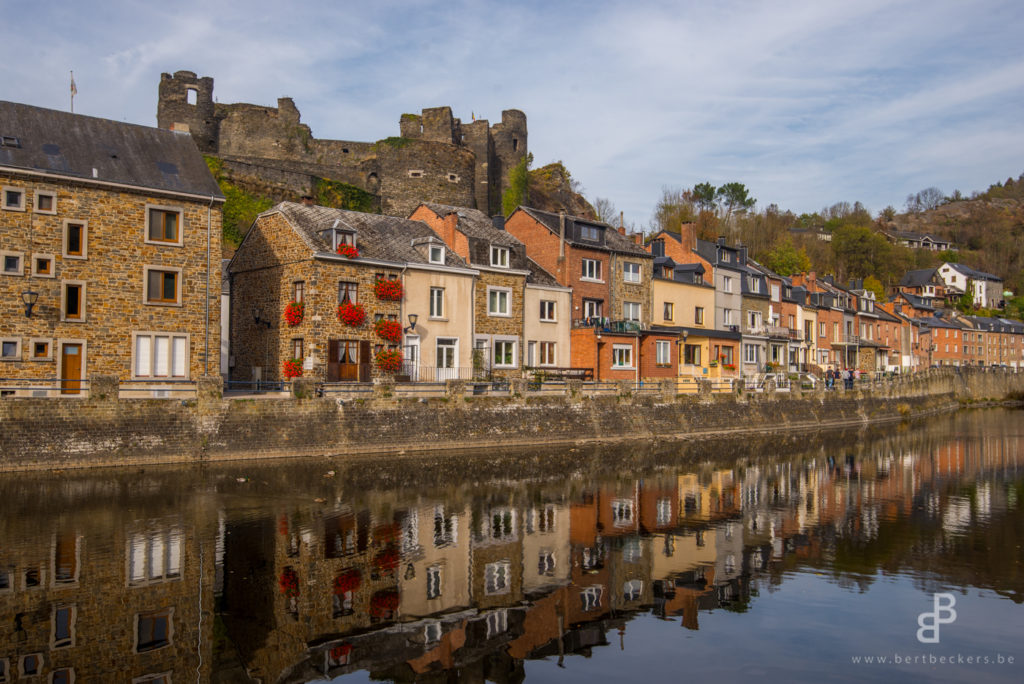
60 km to La Roche en Ardenne

50 km to Durbuy


